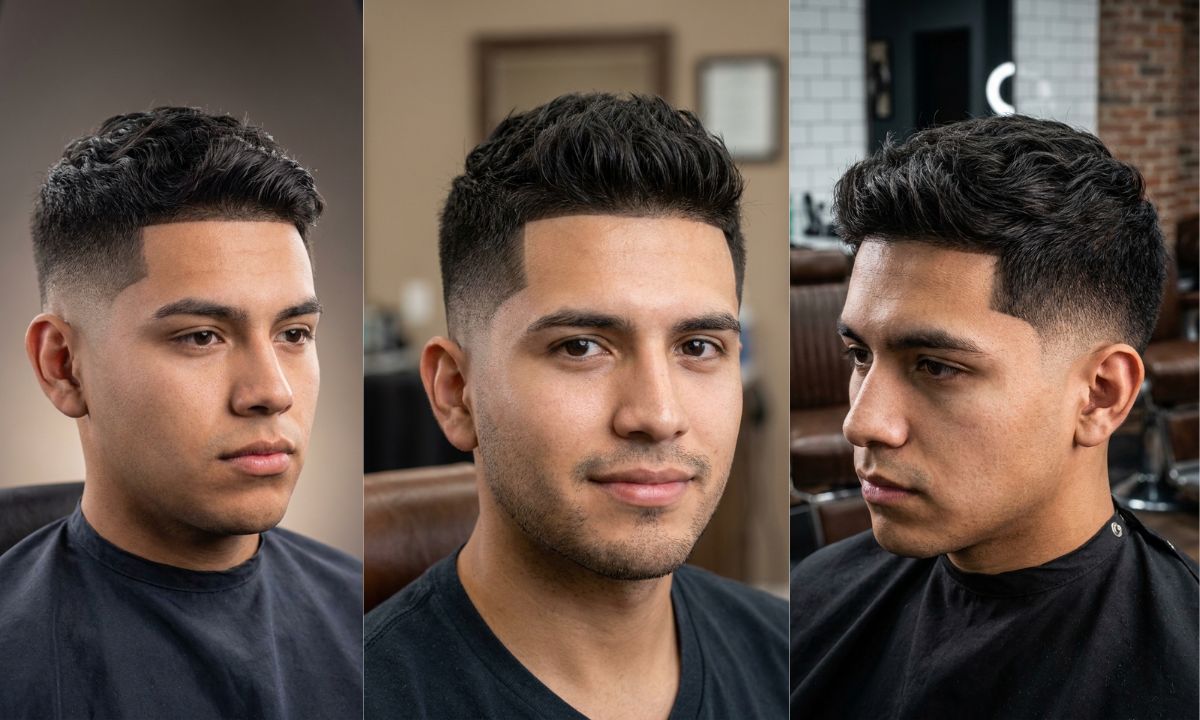
Want the short answer first? A Hispanic low taper fade leans soft and natural, while a Mexican low taper fade goes sharp and bold. Same base haircut, different finish.
Both start with a low fade haircut near the ears and neckline, and both keep longer hair on top. The difference comes down to how your barber handles the edges and the blend. Stick around, because we’re breaking down every detail, from face shapes to how much you’ll actually pay for the upkeep.
What Is a Low Taper Fade?
A low taper fade is exactly what it sounds like.
The fade starts low, right around your ears and neckline, and fades your hair down smoothly instead of cutting it short all over. Your top hair stays longer, so you get length up top and a clean smooth fade transition down below.
Think of it as the “safe but sharp” haircut. It’s not as bold as a high skin fade, but it still gives you that crisp, groomed look. That’s exactly why it’s become one of the most requested cuts at barbershops right now.
Low taper fades are popular because they:
- Look clean without trying too hard
- Grow out nicely between visits
- Suit almost every face shape
- Work for school, the office, or just everyday life
That last point matters a lot. A lot of guys want a haircut that doesn’t need constant touch-ups. This one grows out gracefully, which is why it’s become a go-to everyday men’s haircut.
Read Also: Low Taper Fade Straight Hair: Surprisingly Easy Styles
Hispanic Low Taper Fade
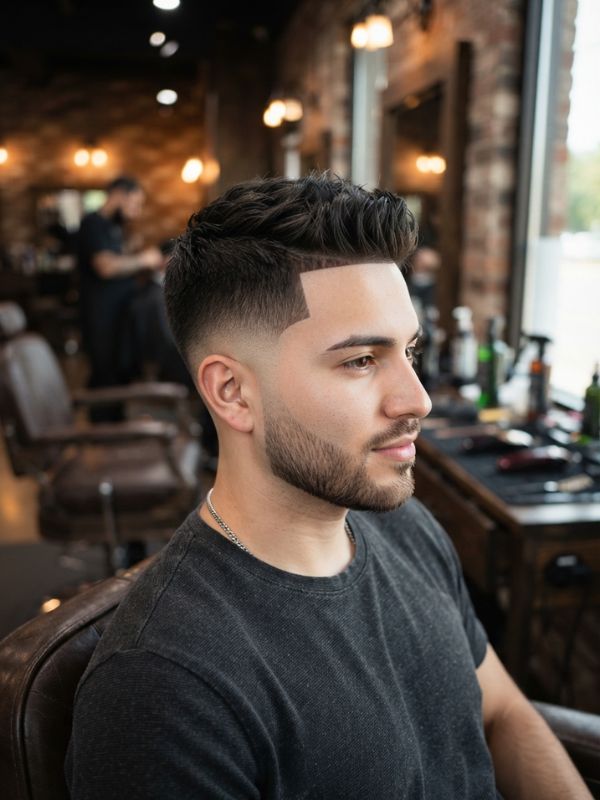
Here’s the real answer to what makes this style different. The Hispanic haircut version of the low taper fade is all about balance. It’s not trying to shout. It’s the cut you’d wear to a job interview and still look sharp doing it.
This style pulls from grooming traditions across many Spanish-speaking countries, and the common thread is a natural hairline paired with a soft fade that blends without any harsh lines. Your barber isn’t going for drama here. They’re going for polish.
Key Features
- Soft fade that blends smoothly with no visible lines
- Natural hairline that looks tidy but not razor-cut
- Balanced haircut that looks good from every angle
- Low maintenance, since it grows out without losing shape
Best For
- Office workers who need a professional hairstyle
- Students who want something simple
- First-timers trying a fade for the first time
- Anyone who wants a clean, low-key look
If you’re nervous about trying a fade for the first time, this is your entry point. It’s forgiving, it’s safe, and it still looks intentional.
Mexican Low Taper Fade
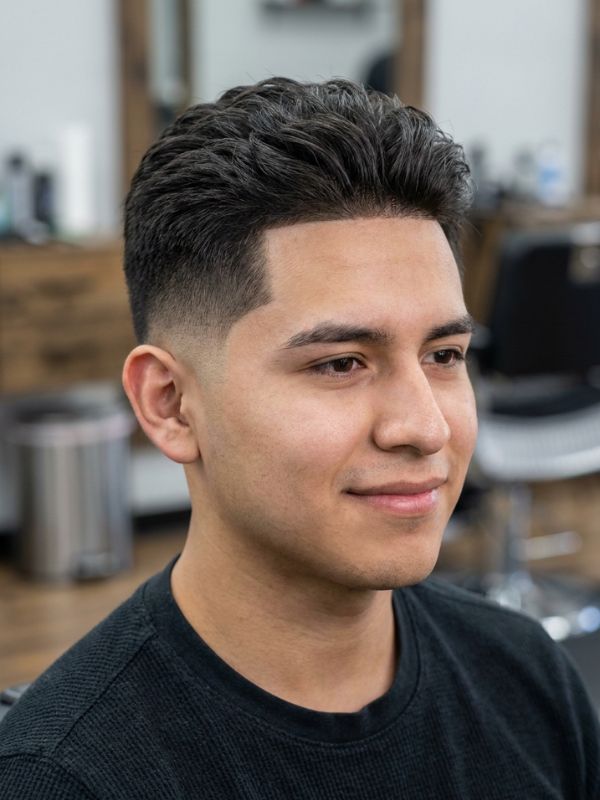
Now let’s talk about the version that turns heads. The Mexican haircut take on the low taper fade comes from a barbering culture famous for precision. Think crisp lines and a fade so clean it looks almost drawn on.
This is the sharp low taper fade you see on guys who care about details. It’s bold, it’s confident, and it usually pairs a razor sharp hairline with a tight beard fade blend.
Key Features
- Sharp edges with a crisp, defined line up haircut
- Clean line-up around the temples and forehead
- Beard blend fade for guys who grow facial hair
- Extra touches like a haircut with hard part or subtle line designs
Best For
- Guys who like a bold hairstyle
- Beard lovers who want everything blended together
- Fashion-focused people chasing trendy fade styles
- Anyone who wants their haircut to stand out
This one takes more barber precision, so picking a skilled stylist actually matters here.
Hispanic vs Mexican Low Taper Fade
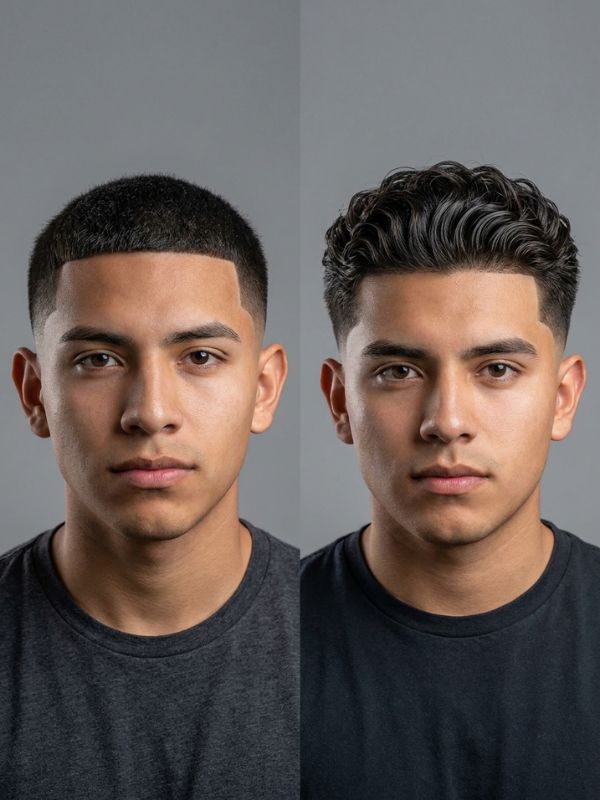
So which one wins? Honestly, it depends on your week.
If your calendar is full of meetings and quiet dinners, the Hispanic style fits better. If you’ve got a night out or you just like turning heads, the Mexican version delivers more punch. Neither one is “better.” They just serve different moods.
| Feature | Hispanic Style | Mexican Style |
| Fade look | Soft and natural | Sharp and defined |
| Hairline | Natural edges | Razor sharp hairline |
| Style feel | Simple and professional | Bold and stylish |
| Barber skill | Clean blending | High precision |
| Best for | Office and daily wear | Fashion and grooming focus |
Simple rule to remember: Hispanic keeps it clean and safe. Mexican brings the sharp and bold energy.
Popular Hispanic & Mexican Low Taper Fade Styles
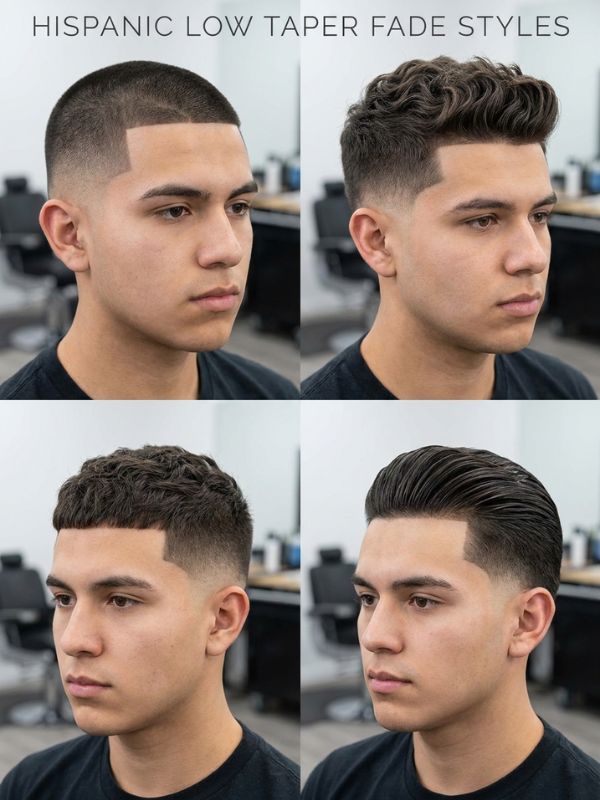
Here are seven styles worth showing your barber, whether you’re going soft or sharp.
- Hispanic classic low taper fade for a clean, simple everyday look
- Low taper fade with curly hair, keeping curls loose on top with tight sides
- Low taper fade with textured top for a modern, lighter finish
- Mexican low taper fade with line up that sharpens your whole face shape
- Low taper fade with beard for a strong, put-together vibe
- Slick back low taper fade for something neat and a little formal
- Long hair low taper fade if you want length on top with trendy sides
Bring one of these to your next appointment. A photo makes the conversation ten times easier.
Face Shape & Hair Type Guide
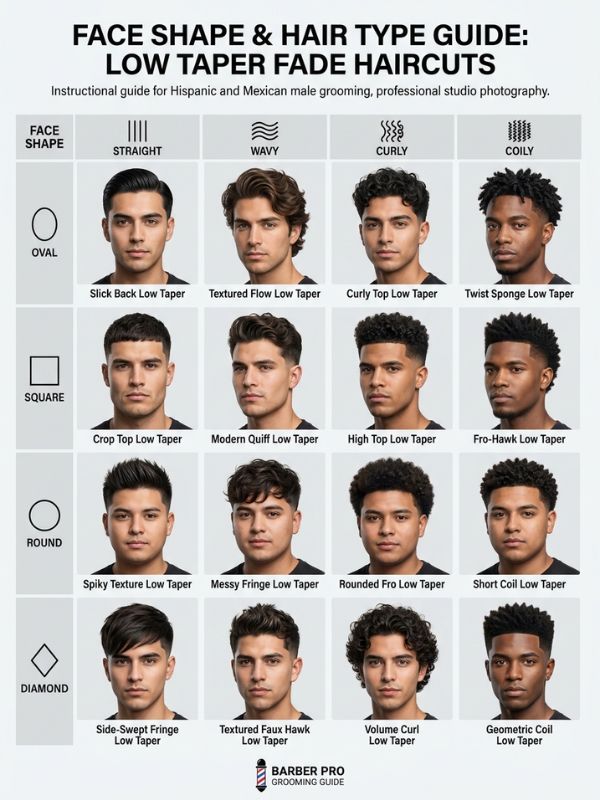
Not every fade works the same way on every face, and that’s worth knowing before you sit in the chair.
Face Shapes
- Round face haircut: the Mexican style adds sharp angles that slim things down
- Oval face haircut: both styles work great, so pick based on vibe
- Square face haircut: the Mexican fade highlights your jawline nicely
Hair Types
- Straight hair: both styles look clean and hold shape well
- Wavy hair: the natural hairline of the Hispanic style looks more effortless
- Curly hairstyle: the Mexican fade gives curls a sharper frame
How to Ask Your Barber
Walking in without the right words can lead to a haircut you didn’t ask for. Keep it simple and specific.
Tell your barber you want a low taper fade, that the fade should start near the ears, and how much length you want on top. That’s really all it takes to get started.
Choose:
- Natural edges for the Hispanic style
- Sharp edges for the Mexican style
- Ask for a beard fade blend if you’ve got facial hair
- Bring a barber reference photo so nothing gets lost in translation
Styling & Care Tips
Your haircut is only half the job. Hairline care and daily styling keep it looking fresh between visits.
Use pomade for hair if you want a slicked, polished finish, or reach for styling cream for curls if your top hair has natural texture. Either way, less product usually looks better than more.
Get a fade touch-up every 2 to 3 weeks to keep the lines sharp. Skipping touch-ups is the fastest way to lose that crisp look you paid for.
Cost & Touch-Ups
Prices vary a lot depending on your barber and city, so treat these as ballpark numbers, not guarantees. Ask your local shop for their actual rate before booking.
More detailed work, like a haircut with hard part or intricate line designs, usually costs a bit more than a classic taper fade. Regular haircut every 2 to 3 weeks keeps things looking sharp without letting the shape grow out awkwardly.
Do & Don’t Tips
Do:
- Choose a barber who’s skilled with fades specifically
- Match the style to your actual lifestyle, not just trends
- Stick to a consistent grooming routine
Don’t:
- Let the fade grow out past 3 to 4 weeks
- Pile on heavy product every single day
- Skip hairline care between appointments
Frequently Asked Questions
Are Hispanic and Mexican low taper fades the same?
Not exactly. Mexican fades tend to be sharper and more defined, while Hispanic fades keep things soft and natural.
Which is better for office jobs?
The Hispanic low taper fade usually wins here, since it reads as more office-friendly and low-key.
Which looks bolder?
The Mexican low taper fade, hands down. The sharp edges and clean line-up make it stand out more.
Are both good for curly hair?
Yes, both styles work with curly hair. It just depends on whether you want a soft frame or a sharp one.
How often should I get a touch-up?
Most barbers recommend every 2 to 3 weeks to keep the fade and line-up looking fresh.
Final Thoughts
Both styles are built on the same low taper fade haircut, just finished differently. Hispanic keeps things clean and low-key. Mexican brings the sharp, bold energy people notice.
Pick based on your week, your face shape, and honestly, your mood. Either way, find a barber who knows fades well, bring a reference photo, and keep up with your touch-ups. That’s really the whole game.

Meet Zyon, the creative voice behind Hair Love. With a strong passion for hair care, styling, and beauty education, Zyon shares practical tips, trusted advice, and easy solutions to help readers achieve healthier, stronger, and more beautiful hair.