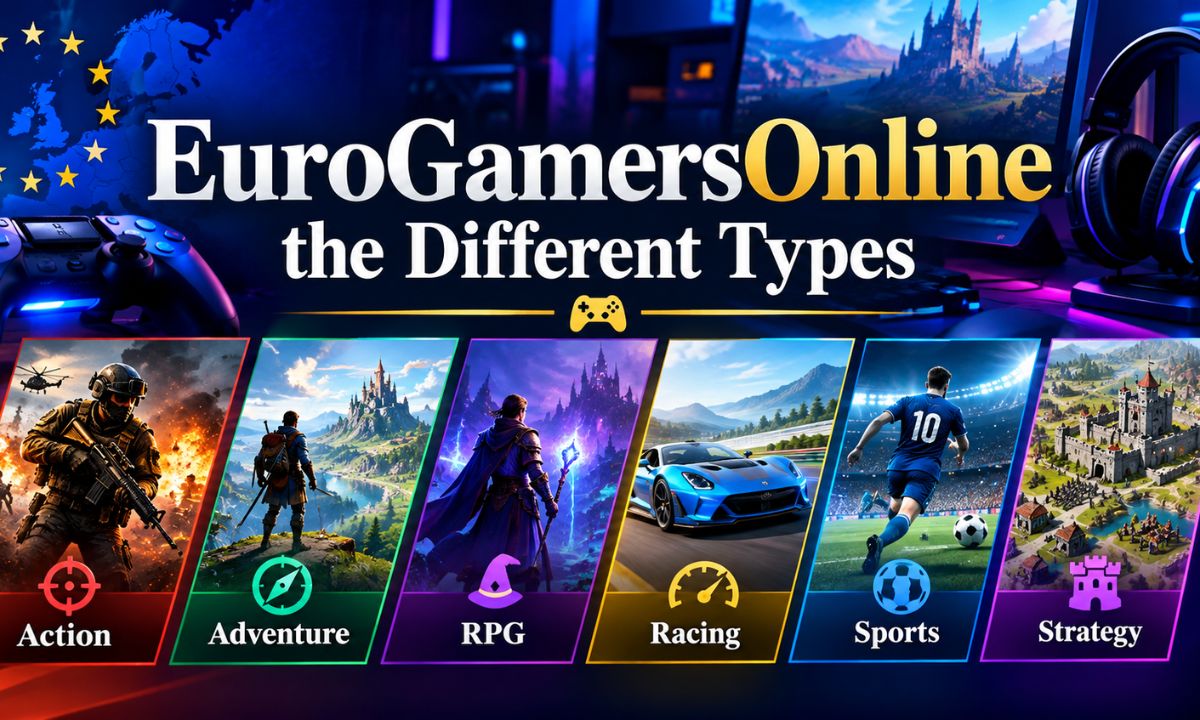
Gaming isn’t one thing anymore. Some players build custom PCs. Others just want a controller and a couch.
That’s exactly why so many people search for EuroGamersOnline the different types. It’s not an official label, but a way to understand gaming platforms, genres, and player styles all at once, in one clear guide.
What Does “EuroGamersOnline the Different Types” Mean?
There’s no formal industry definition here. Instead, think of it as three overlapping layers: gaming platforms, game genres, and player styles, each shaping how people actually play.
EuroGamersOnline itself focuses heavily on PC gaming, console gaming, and gaming gadgets. Its broader content adds news, hardware guides, and reviews, giving readers a wide-angle view of the entire gaming landscape today.
Read More: Fintechasia Telekom: What It Is, What It Covers, and What the Term Means
The Main Types of EuroGamersOnline Gaming Content
EuroGamersOnline organizes its coverage around a few core pillars. Each one speaks to a different kind of reader, whether they’re chasing performance, convenience, or comfort through smart gaming accessories.
Understanding these pillars makes navigating the site, and the broader gaming world, far easier. Let’s break down the three biggest categories readers care about most.
PC Gaming
PC gaming rewards players who like control. You choose your components, your settings, and your upgrades. That flexibility supports nearly every genre, from RPGs to shooters, though it comes with a real learning curve involving drivers and troubleshooting.
Console Gaming
Console gaming keeps things simple. Buy it, plug it in, and start playing immediately. It supports single-player adventures, competitive multiplayer, sports titles, and family-friendly games without demanding technical knowledge from the player.
Gaming Gadgets and Accessories
The right gaming accessories shape comfort and performance. Headsets, mechanical keyboards, controllers, and racing wheels all matter differently depending on your play style. Identify your actual problem first, then buy gear that solves it directly.
Different Types of Gamers
Platforms only explain part of the picture. The people behind the screen bring their own habits, priorities, and expectations, which creates another useful lens for understanding gaming culture.
Some players chase rankings. Others just want company online. Recognizing these differences helps explain why the industry supports so many genres, communities, and hardware options simultaneously.
Casual Gamers
Casual gaming means playing for relaxation, not competition. Sessions might run fifteen minutes or three hours, depending on the day. Puzzle games, mobile titles, and simple strategy games fit well here. Casual doesn’t mean unskilled, just less demanding on daily time.
Competitive Gamers
Competitive gaming revolves around improvement. Players practice mechanics, study maps, and track their ranking obsessively. Ranked multiplayer, esports, tactical shooters, and MOBAs dominate this space, where input latency and frame rate genuinely affect outcomes.
Social and Cooperative Gamers
For many, gaming is fundamentally social. The Entertainment Software Association reports 89% of players aged 8 to 90 have gamed online, with 55% playing weekly alongside others. Social gaming and cooperative gaming thrive on voice chat and reliable connections.
Story-Focused Gamers
Story-focused players value characters and world-building over rankings. RPGs, narrative adventures, and open-world titles draw them in. Strong writing keeps these players engaged long after flashy graphics lose their initial appeal, proving narrative depth still matters enormously.
Strategy Gamers
Strategy gaming rewards planning over reflexes. Players manage resources, position units, and think several moves ahead. Turn-based strategy, real-time strategy, and grand strategy titles all challenge analytical minds seeking a genuinely rewarding mental workout.
Major Game Genres Explained
Genres offer another lens for understanding EuroGamersOnline the different types. Each genre attracts a distinct kind of player, and most modern titles now blend several genres together rather than sticking to one lane.
Here’s a quick breakdown of the most popular categories:
| Genre | Best For | Typical Experience |
| RPG | Story lovers | Quests, exploration, growth |
| Shooter | Action fans | Fast combat, sharp aiming |
| Strategy | Planners | Tactical decisions |
| Simulation | Builders | Managing, experimenting |
| Sports games | Sports fans | Matches, team management |
| Racing games | Speed lovers | Cars, tracks, competition |
| Puzzle games | Problem-solvers | Logic and patterns |
| Fighting games | Competitors | One-on-one combat |
| MMO | Community players | Persistent online worlds |
Gaming Platforms: Which Type Fits You?
Choosing the right platform starts with habits, not specs. Think about how much time you have, what genres excite you, and whether portability or raw power matters more for your lifestyle.
Below is a breakdown of the five major gaming platforms available today, each suited to a different kind of player and gaming routine.
PC Gaming
PC gaming suits players wanting maximum customization and upgrade potential. It handles competitive shooters, strategy titles, and demanding simulations equally well. The tradeoff is complexity, since hardware troubleshooting occasionally becomes part of the overall gaming experience.
Console Gaming
Console gaming favors simplicity and consistency. There’s no need to research components or manage software conflicts. It’s ideal for players wanting straightforward living-room entertainment, though customization options remain more limited compared to PC gaming.
Mobile Gaming
Mobile gaming offers unmatched convenience. According to Video Games Europe, 71% of players use smartphones or tablets to game. It’s perfect for short sessions, though touch controls aren’t always ideal for every genre or gameplay style.
Handheld Gaming
Handheld gaming blends portability with dedicated controls. Valve describes the Steam Deck as a portable PC offering a console-like experience. Battery life, screen size, and performance remain the main tradeoffs travelers should weigh carefully before buying.
Cloud Gaming
Cloud gaming processes games remotely and streams them to your device. This reduces dependence on powerful local hardware significantly. However, internet stability becomes critical, since latency and bandwidth directly shape the overall gaming experience quality.
EuroGamersOnline the Different Types: Quick Comparison
Comparing categories side by side makes decision-making much easier. Below is a snapshot covering platforms and player styles together, highlighting their biggest strengths and the challenges each one presents to newcomers.
| Category | Best Match | Main Advantage | Main Challenge |
| PC gaming | Enthusiasts | Flexibility | Complexity |
| Console gaming | Convenience seekers | Simple setup | Less customization |
| Mobile gaming | Casual players | Accessibility | Smaller controls |
| Handheld gaming | Travelers | Portability | Battery limits |
| Competitive gaming | Skill-focused players | Challenge | Time commitment |
| Story gaming | Narrative fans | Immersion | Longer playtime |
How to Choose the Right Gaming Type
There’s no need to commit permanently to one category. Consider your schedule, competitive interests, social habits, and budget honestly before deciding where to invest your time and money.
These five factors below cover nearly everything worth considering. Answering them honestly narrows your options quickly and helps match your gaming setup to your actual lifestyle.
Consider Your Available Time
Twenty free minutes suits mobile games or quick multiplayer matches well. Several uninterrupted hours open the door to RPGs, strategy games, and long-form adventures instead, where deeper investment pays off significantly over time.
Decide Whether You Want Competition
If testing your skills against others sounds appealing, competitive gaming fits naturally. If gaming is mainly how you unwind after work, relaxed single-player or simulation experiences likely make far more sense for your goals.
Think About Social Interaction
Ask yourself honestly: do you usually play alone, or wait for friends online? Social players should seek cooperative titles with active communities. Solo players may prefer strong single-player campaigns that don’t depend on others.
Set a Realistic Budget
A smartphone you already own may cover casual gaming completely. Dedicated gaming hardware offers far more customization but requires larger upfront investment. Start with the games you actually want, not flashy specifications.
Identify What You Value Most
Ask one simple question: what matters most, story, competition, or connection? Your answer shapes everything else, from platform choice to genre preference, and ultimately determines which type of gaming experience suits you long-term.
Expert Tips for Getting More From EuroGamersOnline
Small adjustments often improve your gaming experience more than expensive upgrades ever could. These six practical tips help readers avoid common mistakes while building smarter, more comfortable setups over time.
1. Choose Your Games Before Your Hardware
Make a list of games you actually want to play first. Check their system requirements carefully. A powerful machine wastes money if your favorite titles never actually demand that level of performance.
2. Look Beyond Marketing Numbers
Specification sheets rarely tell the whole story. Frame rate, latency, and software optimization affect real-world performance far more than raw numbers suggest. Consider the complete experience rather than chasing one impressive statistic alone.
3. Check Accessory Compatibility
Before buying headsets, controllers, or microphones, confirm compatibility with your platform. Check connection types, wireless support, and required software beforehand. This simple step prevents wasted money and frustrating returns later.
4. Protect Your Gaming Accounts
Use unique passwords and enable two-factor authentication wherever possible. Stay cautious around unofficial downloads, suspicious links, and cheat software requesting unnecessary account access. Account security is easy to overlook until something actually goes wrong.
5. Build a Comfortable Setup
Comfort matters more during longer sessions. Pay attention to chair support, monitor height, and desk positioning. An expensive setup isn’t automatically comfortable, good positioning usually makes the biggest practical difference overall.
6. Pay Attention to Ratings and Accessibility
Game ratings help families understand content clearly. The ESA’s Accessible Games Initiative uses accessibility tags so players understand available features beforehand. Checking these details before purchasing saves time and prevents unpleasant surprises later.
Why the Different Types of Gaming Matter
Not every gamer wants the same experience, and assuming otherwise misses the point entirely. Different ages, budgets, and lifestyles all shape how people choose to play games today.
The Entertainment Software Association’s 2026 data shows over 212 million Americans play weekly. That scale explains why platforms, genres, and communities keep multiplying rather than converging toward one single standard.
Pros and Cons of Exploring Different Gaming Types
Trying new genres or platforms expands your overall gaming experience meaningfully. However, exploring too much simultaneously can feel overwhelming, and multiple setups quickly become expensive without careful planning beforehand.
Pros
- Discover genres you wouldn’t normally try
- Platform decisions become significantly easier
- Avoid buying unnecessary gaming hardware
- Better-matched overall gaming setup
- Broader, richer gaming experience overall
Cons
- Choice overload can feel overwhelming
- Some genres involve steep learning curves
- Multiple setups become genuinely expensive
- Multiplayer games depend on other players
- Certain genres demand major time commitments
FAQs
What Does EuroGamersOnline the Different Types Mean?
It describes a broad concept covering gaming platforms, genres, player styles, and related content, rather than one official, fixed industry classification recognized across the gaming world.
Is PC Gaming Better Than Console Gaming?
Neither platform wins universally. PCs offer greater customization and upgrade potential, while consoles provide simpler setup and consistent hardware performance for players wanting fewer technical decisions.
What Type of Gaming Suits Competitive Players Best?
Competitive players should prioritize games rewarding precision and consistent improvement. Input latency, frame rate, and network stability all directly affect performance in ranked multiplayer and esports titles.
Is Mobile Gaming Considered Real Gaming?
Yes, absolutely. Mobile gaming represents a massive share of the industry today. European research confirms smartphones and tablets remain widely used gaming devices across nearly every age group.
Can One Person Fit Several Gamer Types?
Definitely. Someone might be casual on weekdays, competitive on weekends, and deeply story-focused whenever a major RPG launches. These categories describe shifting preferences, never permanent identities.
What Gaming Platform Suits Beginners Best?
There isn’t one universal answer. Consoles and mobile devices offer accessible entry points, though beginner-friendly PC games also provide a genuinely excellent introduction for curious newcomers.
How Should I Choose My Next Game?
Start with available time, favorite genres, preferred challenge level, and budget. Also consider whether you’d rather play alone or alongside friends before deciding.
Final Thoughts
EuroGamersOnline the different types isn’t about crowning one definitive category. It’s about understanding the many genuine ways people enjoy playing games across platforms today.
Consider your budget, schedule, and favorite genres carefully. Once those factors feel clear, choosing the right games, hardware, and gaming accessories becomes noticeably easier and far more satisfying overall.

Meet Zyon, the creative voice behind Hair Love. With a strong passion for hair care, styling, and beauty education, Zyon shares practical tips, trusted advice, and easy solutions to help readers achieve healthier, stronger, and more beautiful hair.